THE MIND OF CHRIST

Philippians 2:5-11 (New International Version)
5 Your attitude should be the same as that of Christ Jesus:

6 Who, being in very nature God, did not consider equality with God something to be grasped,

7 but made himself nothing, taking the very nature of a servant, being made in human likeness.

8 And being found in appearance as a man, he humbled himself and became obedient to death—even death on a cross!

9 Therefore God exalted him to the highest place and gave him the name that is above every name,

10that at the name of Jesus every knee should bow, in heaven and on earth and under the earth,

11 and every tongue confess that Jesus Christ is Lord, to the glory of God the Father.

[Context is crucial in understanding this passage. This is not an isolated theological statement about the person and work of Christ. The previous paragraph (2:1-4) contains Paul's appeal to put aside selfish ambition and the pursuit of empty glory and to embrace self-sacrificial humility in the interests of others and with a view to unity in the body of Christ. 

Verse 5 is a transition from the exhortation in vv. 1-4 to the premier example of such a life in vv. 6-11. When Paul says, "Have this attitude in yourselves," he has in view the attitude just described in vv. 1-4. The most perfect illustration of "this" attitude or mindset is Jesus himself ("which was also in Christ Jesus"), whose self-giving for the sake of others is explained by Paul.]

How do we or anyone else know what we think? It becomes readily apparent by what we say, what we feel, and what we do (actions). Many are confused about what they really think. One may assume that he thinks a certain way without realizing that it is very easy to mislead even oneself.

The ordinary mind is not one with God. What do you think about during your ordinary hours? Does God occupy much of your daily thinking? Does His will and His way lead you in your daily activities?

Paul points to the mind of Christ as the absolute model of what we should aspire to be. (5 Your attitude should be the same as that of Christ Jesus.)

 Jesus existed as essentially one with God (vs 6). He existed in eternity before creation. He was identified with the being, nature, and personality of God. This form of God Christ laid aside in His incarnation.

 He, in fact, thought it a thing not be be grasped.

WWII CHANGED MY LIFE

Pfc. CLYDE B. SMITH, U.S. Marine Corp – WW II EXPERIENCES


Clyde was 17 years old when he and a friend named Raymond went to Portsmouth, VA to sign up. When they took their physicals they couldn’t see well enough without glasses and were turned down by the Army.  The Marines has just passed a new directive that if you could see 20/20 with glasses they would take you.  They had passed their other physicals, so this new directive allowed them to enlist in the USMC.  Clyde had to send papers home to his parents for permission to enlist as he was underage at 17.

They were supposed to be in Norfolk to be inducted on a certain day and Raymond had a Dodge (his dad’s) so they took two girls to Danville just “goofing around” then got enough rationed gas and drove the girls from Leaksville, NC to Danville, VA to do some shopping.  On the way the car slide and turned over on a damp road.  The car was resting on its top in a ditch and Raymond’s girlfriend was pinned under the car. They tried to raise the car enough for her to get out but couldn’t do it.  Clyde rant down the highway to a house for help.  While he was getting help Raymond got under the car enough for her to get out and some people took them to the hospital in Danville.  The girlfriend had cracked ribs.  Because it was an accident, the ambulance took them back to Leaksville.  This was the same night Clyde and Raymond were supposed to leave for training in Norfolk.  Raymond went to see his father at the railroad where he worked.  He asked for the car keys and Raymond had to tell him he had wrecked the car.  With no car, Clyde and Raymond left on a bus for Norfolk to be inducted.

Later they were sworn in at Norfolk Navy Yard and given a steak dinner.  The next day they rode a train to Yamoss, SC to Parris Island. They were in something like a cattle car.  As they drove into the main gate and towards the barracks building, there were trainees all around them yelling telling them they were going to be sorry.  Dad’s group asked if they were to which they replied, yes…they were sorry.

They were greeted by a bulldog-looking Sergeant who had something insulting to say to each of them.  Clyde had his trousers rolled up.  The Sergeant asked him, “Where you come from?” “NC.” “Is it raining up there.” “No.” “Then turn those damn cuffs down!”  They then lined up at the barber shop and in less than a minute, with a razor to their head, the barber spun the chair around and their hair disappeared.

They started out with basic training.  DI Carpenter took about 3 months to turn them into Marines.  They lined up in Quonset huts near a rifle range. Marched. Drilled with a rifle and other weapons. Marched. Trained on the firing range. Marched. They also had to run in the sand at the beach and the sand flies nearly ate them alive. On the firing range they had to shoot at bulls eye targets from difficult positions, like laying down, sitting on one foot, from a prone position, kneeling.  The first day when they fired a rifle, they had 4 shots at 200-500 yards.  The bulls eye was no bigger than a tv screen.  Every day they had to disassemble their rifle.  Clyde did really well on the shooting range because his daddy had taught him to shoot at targets on the branch near their home in Leaksville.

On the first day of firing they fired a full course (68 rounds) at the bulls eye.  If they got a red flag (called “Maggie’s drawers”) that meant they had missed the whole thing.  That was a practice day.  The next day they shot for real for the record and Clyde’s score was 316 (340 was perfect).  He got a bulls eye almost every single time!  Once, out of 16 shots, he had all bulls eyes.  The Marines kept him as a shooting coach on the range.  Clyde coached about 6-8 months.  Every time they put up a notice for other assignments, he kept putting his name on the list. He thought he was missing something, but it was really a cinch.  No guard duty. No work assignments. Off every afternoon.  The barracks that housed the coaches was quite large.  Every Saturday at noon he was off until Monday 7:00a.m. He had a lot of freedom and went all over the place on his off time.  But, the Marines finally took him up on his request for another assignment.  He’d live to regret that.

Clyde was sent back to Norfolk to the Navy Yard and the hard stuff began.  Here he had sea school for training to be aboard a ship.  His platoon was only going to the Pacific Theater.  Every Marine is a “rifleman”, but to be stationed on a ship, each had to know about the ships.  50 Marines stationed on each ship.  Marines felt the Navy sailors were lax and undisciplined.  The Marines served as the Captain’s orderly, did burial duty, and were stationed mid-ship to one of 7 gun positions.  There wasn’t much fraternity between the Sailors and the Marines.  There wasn’t any friction, they just didn’t hang around with each other.  Clyde said, “I always felt that our 50 Marines (40 sailors and 10 Marines) did more formal work.  Marines were the ones assigned to gang planks, guarding the ship, etc.”  The 2nd division wore a braid from a French WWI design.  Dress blues were never issued during war time.  You had to borrow one if you wanted to wear it to something.

The USS Bataan was the name of the aircraft carrier and the Captain, Captain V. H. Schaeffer, wouldn’t allow any problems.  He ran a tight ship.  The Bataan, a 600’ foot ship, was built and commissioned in Philadelphia. They had a shakedown cruise from Philly to Trinidad. They ran exercises flying planes on and off the ship. They carried 24 F6-F "Hellcat" fighter planes and nine torpedo bombers, known as BMTs. When ready, they left Philly through the Panama Canal. The ship was supposed to have gone to San Francisco, but the ship which was supposed to carry the troops had been banged up on the locks, so the Bataan picked up Marines from San Diego and carried them to Honolulu.  They were there for only a short time to get supplies and pick up some planes and then they were off to the Marshall Islands on April 4, 1944 to join Task Force 58.  They cruised southwest with battleships, and other ships from the fleet.  An aircraft carrier is dependent on battleships and cruisers.  They are placed inside the rest of the fleet for protection. En route, crossing the-l8Oth Meridian at the Equator, they stopped for the traditional, colorful ceremonies in which the old salts initiated the men who had never before crossed the International Date Line into the "Domain of the Golden Dragon,” then on to assist in the air operations in the invasion of against Hollandia, New Guinea – Weatac.  While there they supported the Army for a 7 day invasion.  They bombed to harass, then they went to the Mariannas, to Siapan, Guam, then chased the Japanese fleet. They arrived at the Marshall Islands on May 4, 1944. The task force was ordered to strike Iwo Jima on June 15 in the afternoon, but after receiving reports of a large Japanese force closing the Marianas they canceled it and headed south back to join Task Force 58.

The 1st Battle of Eastern Philippines was Clyde’s first time to man guns on the Bataan.  During the first day of the Battle of the Philippine Sea, Bataan's aircraft claimed 10 Japanese planes out of the approximately 300 enemy aircraft lost in the battle dubbed the "Great Marianas Turkey Shoot."  Clyde was on a 40 millimeter gun crew as a loader, passing shells to the gunner.  He didn’t care for the sights on the gun which was a gyroscope.  An image was imposed and each ring was a certain distance.  Every 4th shell was a tracer to help know where you were hitting in relationship to the target.
At 1st Battle of Eastern Philippines the Japanese launched planes from a distance that too far for them to get back from.  So the Bataan launched planes to meet the Japanese and some to wait for them at the islands where they hoped to land.  Clyde hardly ever got off the ship.  On Saipan it was mountainous and there were lots of caves.  They couldn’t wander too far because the Japs were hiding in the caves.

They were in a big storm at sea and the pounding waves threw things out of adjustment.  It changed the elevation for the planes as well as other damage.  The ship had to return to Pearl Harbor for repairs.  The USS North Carolina escorted them to Pearl.  The repairs could not be done at Pearl Harbor so they had to go to San Francisco - Hunter’s Point, in San Francisco Bay, arriving July 30, 1944. While on R&R in the Bay, Clyde’s cousin, Gene’s ship was there too.  He got permission to go visit Gene and they had dinner and went to a boxing match.  Another R&R cruiser game in and it had Raymond on it so Clyde got to reunite with his friend from Leaksville who he had signed up with.

Once back in Pearl, Clyde was transferred to 2nd Division and shipped out of Pearl on a troop ship.  It wasn’t very comfortable as the bunks were so close together you could only get in by sliding in.  And it was very HOT!

The 2nd Division was stationed in Saipan, commanded by Major General LeRoy P. Hunt. They went out on patrols of 39 men just looking for Japanese.  While on these patrols, Clyde carried a Browning Automatic Rifle.  They ran into Japanese at different times who seemed anxious to stay unknown.  It was thought that they probably were getting their supplies from what the Marines were throwing away.  Just off the roads there were cane fields that were 6 feet high but they never ran into any troops face to face.  The Lieutenant kept them patrolling and Clyde never shot his gun the whole time they were there.  Any of the Marines who rambled into caves were killed.  Otherwise, they didn’t run into any trouble.

On the southern end of Saipan was a landing strip for B29’s.  They also had one in Tinian and Guam.  The Navy maintained a training area on Tinian, the island 80 miles north of Guam, used to launch the two atom bombs that ended World War II. Tinian became an important operational base for the rest of the Pacific war. It had four airfields for the B-29 bombers.

In February 1945 there was a battle at Iwo Jima.  Clyde was spared again when plans were changed last minute and they weren’t needed so they unloaded.  They had broken camp, packed the tents, and ready to load up when they were secured and put the tents back up. On March 19, 1945, Clyde recalled the Bataan had a narrow escape when a Japanese plane dropped two bombs on the U.S.S. Franklin, which was 3,100 yards from the Bataan at the time. "After the bombs hit, the Franklin was out of control and was heading directly toward us. We maneuvered our ship and the Franklin just missed hitting us." The next day, the Bataan suffered its first losses when one sailor was killed and 11 were wounded during an attack on the ship by Japanese bombers and fighter planes.

On April 1945 Roosevelt died, which shocked the nation.  Clyde’s Division was on their way to Okinawa for the invasion on April 1 when they got the news.  From the information that was being given to the Marines “it sounded like Hell with all enemies then – dangerous conditions.”  Self-protection was more in Clyde’s mind.  Any “gung-ho-ism” had gone out the window by this time.

May 15, 1945, when the Bataan was hit by shell fire and nine men were killed and 26 others wounded. It was most casualties of any single day's in the Bataan’s history. On July 10, 1945, the Bataan was part of the Task Force's 1,000-plane attack on Tokyo.

In the Fall of 1945 the 2nd Division then went to Okinawa for the invasion of Japan from landing crafts.  They were to be support for the 10th Army who made the invasion.  They had island “hopscotched’  taking islands as they went and they were now close enough to invade Japan in what was to be called “Operation Downfall”. They went from the southwest side of Okinawa and the Marines were on the southeast side.  There were ships around them.  They were attacking from the bluff side.  The main attack was by Army on the southwest side.  The attack never happened. The operation was cancelled when Japan surrendered after the atomic bombing of Hiroshima and Nagasaki and the Soviet Union declared war against Japan. We heard about it, Clyde said, on August 6, 1945 at 10:30pm because one of the guys had a short wave radio that made the announcement about the atomic bomb.  By this time they had gone to Saipan after there was no landing in Okinawa for the invasion on Japan.  This was a near miss for Clyde and the other troops that would have been involved.  Truman had been advised by Gen. Marshall that casualties could be around 41,000 in the first 30 days.   Nearly 500,000 Purple Heart medals were manufactured in advance in anticipation of the casualties resulting from the invasion of Japan. To the present date, all the American military casualties of the sixty years following the end of World War II—including the Korean and Vietnam Wars—have not exceeded that number.

When we heard about the bomb, it was already understood there would be in an invasion of the southernmost main Japanese island, Kyūshū.  The task force launched planes on August 15 because we didn’t have any word about Japan surrendering, but the attack was called off and the pilots were singing “Oh, What A Beautiful Morning” over their plane’s radios. When relaying this story many years later, Clyde said it scared him in retrospect about how close they came to this invasion in which he stood a good chance of being killed.  They had no sense of danger from the A-bomb residue when they became the first occupation troops to land in Nagasaki after the bomb after Japan surrendered on August 14, 1945, taking up occupation duties that lasted for nine months. Clyde was there for over 4 months.

The wise decision to send the ships from the Okinawa area back to their original location paid off in a different way than planned. Instead of using the ships and troops for Operation Downfall to invade Japan’s mainland, many were used in the occupational duties of Japan after it had been ravaged by the Atomic bombs. The main body of occupation troops, Clyde’s included, entered Nagasaki about 45 days after the bombing. The 2nd Marine Division consisted of 20,000 Marines. In each city, a group of American scientists from the Manhattan Engineer District arrived three days before these troops and performed a radiological survey.

The center of Urakami, 4 miles north of Nagasaki, looking NE from Nagasaki.
This is what the A-bomb left.

There was some concern when they went into the harbor in landing craft in Nagasaki Mitsubishi Ship Yards.  Part of Nagasaki in the south remained intact.  The bomb went off in the northern part of the city close to ground.  This actually saved the southern part of the city.  Without thought of danger, they went right into the area where the bomb had gone off.  Clyde was there until the first of December 1945.  They lived in a shipyard worker’s building until they were sent home.  Clyde reported that a typical day in Nagasaki was spent patrolling.

Clyde and the rest of the troops went by train from Nagasaki to Sasebo which took several hours.  From there they left aboard a ship on December 5, 1945, landing in San Diego on December 20.  They sailed the Japanese Current. They arrived back at Camp Pendleton at 9-10:00pm.  The camp was almost apologetic about not having china for them to eat on.  They left Camp Pendleton after the 1st of the year and were taken to Los Angeles to a train station.  Clyde had all his possessions in a sea bag.  At the train station all the sea bags were loaded stacked on top of each other. He never saw it again.  He got home with a rifle, a Japanese sword and a ruptured duck (a pin signifying discharge).  He was brought by train to Camp Lejeune in NC and discharged there.  He took a bus back home to Leaksville to no great fanfare.  He had been gone a little over 3 years - - Clyde said, “Long enough!”

Because of his service and the enactment of the GI Bill, dad said he was saved from life working in the mill. The war opened up the world to him. The GI Bill opened up education. He went to the University of North Carolina, studying law. Just shy of taking the bar two things happened to change the course of his life at this point at the age of 28. He met mom and they married just 6 weeks after they started dating, and his faith and God, like an invisible but powerful magnetic force, pulled him towards a lifetime of service as a minister. That's another story of an amazing man.

A PLACE CALLED HEAVEN

“A PLACE CALLED HEAVEN” - John 14:1–3

“Let not your heart be troubled. Ye believe in God, believe also in Me. In My Father’s house are many mansions… I go to prepare a place for you… I will come again and receive you unto Myself; that where I am, there you may be also.”

As a preacher, I’ve stood more than once at the bedside of Christians on their way home. For a Christian, death is not something to fear - it is the door to an eternity with God--the place that Jesus said he went to prepare a place for us, that where He is we might be also. There was a famous Southern Baptist preacher named Dr. Robert G. Lee—you may have heard of him; one of his sermons, “Payday Someday”, was considered one of the greatest sermons of the 20th century. When R.G. Lee was 91-years old and on his deathbed, there were several godly men present, among the four men was Billy Graham. As the men sang and prayed around the bed of this dying preacher, he suddenly opened his eyes and the first person he saw was Billy Graham. When Graham leaned down to talk to him, Lee put his hands on Graham’s face and pulled him down toward him. Then he asked Billy, “Have you won the world yet?” Next, Lee said something those four men would never forget. He said, “I saw heaven. I saw Jesus. I saw my mother. I have preached on heaven many times, but I never had the vocabulary to adequately describe it. I never did justice to heaven in my sermons.”  He died not long afterward.

Dr. Lee was the author of a “A Place Called Heaven”, a classic—yet even he said, “I never did it justice.” We are limited—Dr. Lee was limited, I am limited, you are limited. Could it be that what made Lee so anxious to get the world won to Jesus was the fact that he had just seen Jesus in heaven and wanted everyone else to have that indescribable experience?

The Bible tells us more about what will not be there than what will be there; but it tells us enough to leave us in breathless wonder. Paul was “caught up… into the third Heaven,” and he heard “unspeakable words… not lawful to declare.” Some things the Lord has kept as a sacred secret. But He has not kept secret this: Heaven is real, prepared, and personal—“a place for you.”

Many talk about Heaven. The Gallup people once found that most Americans believe in Heaven; fewer believe in hell; almost none think they are going there. There’s an old gospel song that says, “Everybody talkin’ ’bout Heaven ain’t going there.” I remember a prominent man—former governor, presidential contender—standing straight with that silver hair and saying, “If You’ve got anybody up there, You ought to let me in.” Not one word about the grace of God. Not everybody talking about Heaven is going to Heaven.

When I read John 14, I hear the language of home. Not a fog or a feeling, but a house with many rooms, a table where the family gathers - I picture my own family of seven sitting around our dinner table holding hands - a place where you are expected and wanted. Scripture says that to be “absent from the body” is to be “present with the Lord.” Jesus told a dying thief, “Today shalt thou be with Me in paradise.” David, who buried a child, said in faith, “I shall go to him.” And Paul, honest about life’s conflicts, still sighed, “I have a desire to depart, and to be with Christ.” The body will await its resurrection; the spirit of the redeemed goes straight to Jesus. That is not poetry; that is promise.

There have been several books written on the subject of heaven, told by people who had died for a time, then come back to life. Their stories of going to heaven are remarkably similar. Their details differ, but the notes harmonize with Scripture: an overwhelming sense of being known and loved, a light more alive than the sun, seeing loved ones who had died, beauty that seems to sing, colors they do not have names for, and—above all—a Person at the center whose presence settles every fear. Some speak of a border and of being told, “Not yet.” These type of stories echo what the Bible tells us, they help us imagine what the Word already declares. “In Thy presence is fulness of joy; at Thy right hand there are pleasures for evermore.”

Only the redeemed are going to Heaven. You have to be Heaven-born to be Heaven-bound. “Ye must be born again”—born from above. Revelation says those there “washed their robes, and made them white in the blood of the Lamb.” Not “dyed-in-the-wool Baptist”—washed-in-the-blood Baptist. Not membership. Not goodness. “Written in the Lamb’s Book of Life.”

Now don’t get the idea that heaven is some sort of a gaseous, nebulous state of mind or a cloud where we all strum on harps for eternity. No! Heaven is a real place. One day you’ll go there in a resurrected body and you’ll have to have something toyou’re your resurrected foot on. Heaven is a real place; it is somewhere on God’s map.

The saved go to Heaven immediately upon death. Listen to this Scripture, II Corinthians 5:6-8,  Paul says, “Wherefore, we’re always confident, knowing that while we are at home in the body,” your body is a house, you live in it, “we are at home in the body, we are absent from the Lord,” that is, His literal presence, “for we walk by faith and not by sight. We are confident that to be absent from the body is to be present with the Lord.” The saints go immediately to Heaven upon death. In Acts 7:56-59, when Stephen was stoned and martyred for his faith, he looked up and said, “I see Heaven, I see Jesus on the right hand of the Father.” And then he prayed, “Father, receive my spirit.”

Some ask, “will I know my loved ones?” Yes! When Moses died, here’s what God said to Moses, “Get thee up into the mountain and die in the mountain and be gathered unto thy people.” Now Moses’ mother, that mother that made him that little ark. He said, “Moses, go see your Mama. Get up into the mountain; be gathered to your people.” Abraham knew that he was going to have a family reunion. Genesis 25 verse 8, “Then Abraham gave up the ghost,” that is, he yielded up the spirit, “and died in a good old age, an old man and full of years, and was gathered to his people.” Listen to what the Bible says about Isaac. Genesis 35 verse 29, “And Isaac gave up the ghost and died and was gathered unto his people, being old and full of days, and his sons Esau and Jacob buried him.” Listen to what the Bible says about Jacob and his family reunion in Heaven. Genesis 49 verse 33, “And when Jacob made an end of commanding his sons, he gathered up his feet into the bed and yielded up the ghost and was gathered unto his people.” Now his body is still somewhere in the grave, but he gathered with his people. He is with his people. That’s what Jesus talked about, a family reunion in Heaven.

 There are some myths about Heaven. One of the myths is that we’re going to wear a wooly robe with a halo sitting on a fluffy cloud, pluck a harp. You know, Heaven’s going to be so boring, and all day long we’ll have to listen to church anthems. There’ll be music in Heaven, but I’ll guarantee you, it won’t be boring music. Heaven is rest, but it’s not laziness. It’s not just lolling around for all eternity. Adam had work to do before sin ever came into the garden, but it wasn’t labor, it wasn’t by the sweat of his brow, it was to dress the garden the keep it. Put this verse down, Luke chapter 19 verse 12 through 18. Here out Lord is talking about what we’re going to do in Heaven. Read Luke 19, the Parable of the Talents. He has given to us certain abilities and certain things that we are to be made stewards of. He says, “Occupy till I come.” That doesn’t mean take up space. An occupation is what you do. He says, “Get busy! And when I come again, I’m going to reward you. And I’m going to reward you according as your labor should be and you’re going to serve Me.” 

You know, we’re going to help our God rule the vast universe. Paul said in Second Timothy 2:12, “If we suffer with Him, we’ll also reign with Him.” Here’s a great verse I love from the book of the Revelation, chapter 7 verse 15. The Apostle John had a glimpse into glory, and he saw the servants of God and here’s the way he described them, “Therefore, they are before the throne of God and serve Him day and night in His temple.” “They serve Him day and night.” The greatest joy that I have is serving the Lord. What a privilege to serve the Lord. Sometimes I wish I could serve Him better.

            Heaven will be a place of absolute perfection beyond what we can imagine. We know what will not be in heaven: “There will be no more tears, no more sighing, no more crying, no more dying, no more pain, for the former things are passed away.” What is Heaven? Heaven is the presence of all that is good. Present, Heaven is the absence of all that is bad.

            A man dreamed that he died, and he came to the portals of Heaven, and he knocked on that pearly gate, just a dream, and a voice within said, “Who is it that seeks entrance into Heaven? What is the password?” And the man said, “I’m a moral man.” “Well, what is the password into Heaven?” “Honesty.” And the voice within said, “Depart from me, ye that work iniquity, I never knew you.” Another knocked at the portals of Heaven. The voice within said, “Who is it that seeks entrance into Heaven, and what is the password?” This man said, “I am a humanitarian.” “What is the password to Heaven?” He said, “Love, charity, good deeds.” And the voice from within said, “Depart from me, ye that work iniquity. I never knew you.” Another knocked. “Who is it that seeks entrance into Heaven and what is the password?” “I am a religious man.” “What is the password?” “Religion. Baptism. Church attendance.” The voice within said, “Depart from me, ye that work iniquity. I never knew you.” Finally a fourth man knocked at Heaven’s portals. This is all just a dream. But the voice within said, “Who is it that seeks entrance into Heaven and what is the password?” And the man on the outside said, “I’m a Christian. I’ve given my heart to Christ. I’ve been born again. In my hand no price I bring; simply to Thy cross I cling.” And the voice within said, “Open wide the gates and let him in, ‘For of such is the kingdom of Heaven.’” Have you ever done that? Have you ever said, “Lord, I’m not trusting my honesty, I’m not trusting my charity, I’m not trusting my religion! Lord Jesus, thank You for dying for me. I trust You.” You do that, and I promise you on the authority of the Word of God, you’ll be Heaven-born and you’ll be Heaven-bound.

            Let’s pray: Father God, I pray today that many will say an everlasting, “Yes,” to Christ and be saved. Now, let’s get it settled right now. I want you to pray this prayer after me, “Dear God,” just pray it right now, “Dear God, I’m a sinner, I’m lost, I need to be saved, I want to be saved. Jesus, You died to save me, You promised to save me if I would trust You. I do trust You with all of my heart. Come into my heart, forgive my sin, save me, Jesus. I trust You to do it right now. Thank You for doing it. In Your name I pray, Amen.”

TRAVELING BACK WITH MY DAD


Taken from notes I took on a warm, beautiful July day talking with my dad in his backyard.

It's July 8, 2005. I bought daddy a free-standing hammock and put it under the dogwood tree in his backyard. He wanted to be outside and the most pain-free way for him was to be able to lie down. Daddy had none cancer. He shouldn't be alive but God gave us all more time.  And God gave this faithful man of God more painless happy days. We were grateful.  As he looked up through the filigree of tree branches which shielded him from the sun on this early July morning, I pulled up a chair to sit next to my father. I felt it - this was going to be a special day with my dad. I had a notebook and pen in hand because I wanted to document wherever his thoughts wanted to take a stroll. I wanted to hear - - everything! I wanted to capture the oral history of the first man in my life.


Daddy started talking about when he was a young boy in Leaksville, NC. Leaksville is in Rockingham County, the county from which all my father's ancestors came from. There were three towns much alike in culture and industry: Leaksville, Spray, and Draper. Leaksville was the oldest of the triplets, in fact it was the oldest town in the county. Colonel William Byrd was given a grant of twenty-thousand acres when he led a commission to establish the dividing line between Virginia and North Carolina. He said it was the most beautiful area he had ever seen and he called it "The Land of Eden." In 1967 the three unincorporated towns incorporated into one city called Eden.

Daddy told me he loved going on Saturday afternoons to see the black and white spaghetti westerns at The Grand. They usually were Tom Mix westerns. Tom, "the King of Cowboys" and his intelligent horse Tony always "saved the day," and when the picture was over daddy would run home and recount the entire story to his mom and dad. He said they hated when he did that but would tolerantly listen. He said he loved going to the movies and whatever the music was, people came out of the movie house humming and singing. Most times the movie reel broke so you'd just sit in the dark waiting for it to start up again! Daddy's good friend, Tommy Smith, sold popcorn in the lobby. He always managed to give daddy popcorn that was only half popped. If dad happened to take a girl to the movies he'd get a cherry smash (coke and cherry syrup) and they'd share a bag of half-popped corn.

"Back then," he explained, "...we had ice wagons that came by. You'd chip off whatever you needed for your icebox. As the ice melted it ran through a hole cut in the bottom into the basement.  Another inconvenience was no running water. There was a pump out back and everyone drank from a common dipper which hung from a hook. Of course we had an outhouse too.

Two times a year a hog was killed and they would make bacon and sausage and hams, sharing with the neighbors. When those neighbors slaughtered their hog, they would do the same. Those were simple times, simpler than today for sure. If some of us kids wanted to play ball we'd get string from the mill and make a ball with it, then use a limb from a tree as a bat. One time, daddy said, Buck threw the ball and my glove finger got bent back and the ball hit my nose and broke it. I had to walk across town with dad to the doctor's with my nose bleeding. Another time Buck and I were jumping on the bed and we broke the bed! Buck tried to convince me to let him use a blowtorch to try and fix it but I was afraid he'd burn my house down. He gave me $5 to tell my mom and dad I did it. I'd do anything for money!

Back then Henderson was a mean town. Aunt Lola, my father's sister, lived there. Buck's dad was stabbed to death on the street one night for no good reason. Lola was a good person. She drove around a lot. She killed a kid one time that ran out in the street from between two cars. Lola never drove after that.

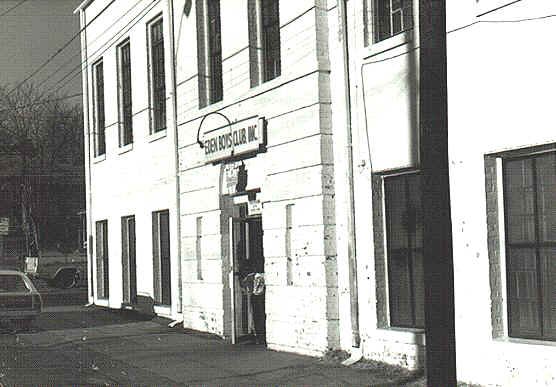
Daddy talked fondly of the Leaksville Boys Club (YMCA) which became like his second home. The club was on Harris Street, the same street as his family home. During the Depression, like so many other families, the kids had to seek inexpensive entertainment and playing basketball and baseball at the Boys Club provided good clean fun. The man who ran it during the 1930's was Thomas Jefferson Carter. He became like a second father to my daddy. His own father drank too much at times and could be an angry drunk. 

Grandpa had a hard life, but one typical of the time in history and the place. He was a smoker and I remember an odd thing - his legs from the knee down were entirely hairless, just smooth pale skin. I found out later it was because when he fought in WWI their uniforms were wood britches and long wool socks. He wore them so much that the hair on his legs never grew back. Grandpa had only a third grade education, and went to work at the Marshall Fields Mill (later Fieldcrest Mills) when he was 13 and had to stand on a stool to reach his work area. He worked there until he retired at 65 as a mechanic. He never owned or drove a car, but walked every weekend from his home to Washington Street, the main drag, to hang out with his buddies drinking coffee and playing checkers at the diner. He did that as long as he was alive.

Greystone Rock Quarry is in Henderson and was one of our swimming holes. Buck and I would go skinny dipping out there in that cold,
clear water. I'd get him to hand me down my clothes which sometimes he didn't thinking himself very funny.  His brother, Gene, was a nice guy. He was a radioman on the Langley aircraft carrier during WWII. Gene was a good baseball player.


I like poetry. When I was 12 years old I was cutting up in class so the teacher made me quote "Birches" by Robert Frost in front of the class.  I graduated high school when I was just 16 then started working in the mill in Spring until I went to Portsmouth, VA because I wanted to be enlist. Raymond Shouhf and I walked over to the Marine recruitment headquarters one day. We had nothing better to do and we had been turned down by the Army and Navy because of our vision. We were told that the Marines had just come out with a directive that if your vision could be corrected to 20/20 with glasses they would take you. So that's how I became a Marine at 17 years old. Something funny, if you look at my military ID picture you'll see my eyes are looking off to the side. That's because there was an office full of girls off to the side and I'm checking them out while having my picture taken!

Before going to basic training, one day we went driving in Raymond's dad's car with some girls to go shopping in Danville, VA. A spring came lose under the car and we went off the road and flipped over. Raymond's girl was thrown out and pinned under the car in a ditch. I took off running for help. While I was gone Raymond was able to lift the car up just enough with his back for her to get out. Fortunately she only had a broken rib.

I did my training in Paris Island. I got off every Saturday until Monday morning while there because they found out I was somewhat of a sharp shooter so they made me a coach. I also got extra pay, but I paid for it when I was deployed. When I got over to the Pacific they gave me a 16 pound Browning automatic to carry along with extra ammo. Some of the time a bigger fellow Marine in my platoon had pity on me and carried the Browning.

At the end of the war I ran into a nice Japanese soldier who was from Nagasaki. I have a picture of him. We exchanged weapons, my rifle for his sword. Our own little detente I guess. Sometime later after marriage and kids, Martha and I went to England. When we visited Branscombe, England I felt like I'd come home again. It was just like the mountains of North Carolina or Virginia. We loved sitting in the Mason Arms Pub and visited the local anglican church. In the sermon the pastor said, "If we can't get along with each other what do we have to say to the world?"  What indeed?

There's a poem I memorized when I was younger. It was written by Robert Frost and called "Mending Wall." I think I agree with Frost -- "Something there is that doesn't love a wall." I think that day at the end of the war, the Japanese soldier and I tore down the wall for just a moment and became neighbors.

MENDING WALL
‘Stay where you are until our backs are turned!'
We wear our fingers rough with handling them.
Oh, just another kind of outdoor game,
One on a side.  It comes to little more:
There where it is we do not need the wall:
He is all pine and I am apple orchard.
My apple trees will never get across
And eat the cones under his pines, I tell him.
He only says, ‘Good fences make good neighbors.'
Spring is the mischief in me, and I wonder
If I could put a notion in his head:
'Why do they make good neighbors?  Isn’t it
Where there are cows?  But here there are no cows.
Before I built a wall I’d ask to know
What I was walling in or walling out,
And to whom I was like to give offense.
Something there is that doesn’t love a wall,
That wants it down.'  I could say ‘Elves’ to him,
But it’s not elves exactly, and I’d rather
He said it for himself.  I see him there
Bringing a stone grasped firmly by the top
In each hand, like an old-stone savage armed.
He moves in darkness as it seems to me,
Not of woods only and the shade of trees.
He will not go behind his father’s saying,
And he likes having thought of it so well
He says again, ‘Good fences make good neighbors.'